On the night of Sunday March 20, 2022, a particular WhatsApp group wouldn’t stop buzzing.
Word had got out that a big story that would shake the Nigerian tech space was coming out the next day. Rumour had it that the story was about Nigeria’s highest valued tech unicorn and that the fellow working on it was a certain enfant terrible of Nigerian journalism. For an unspecified reason, this was very bad news.
Dedicated to Nigerian Tech PR and networking, this WhatsApp group became Ground Zero for the preemptive response to the story, whose very existence was still a rumour. Lawyers were scrambled, friendly journalists were put on notice, social media assets were readied, and a lengthy press release was hurriedly slapped together in response to a story which at that point, consisted of 6 lengthy call transcripts, several unconnected Google Keep notes, a 55MB folder of screenshots and PDF documents, and a rough draft inside my head.
Head Fake: The Story That Never Was
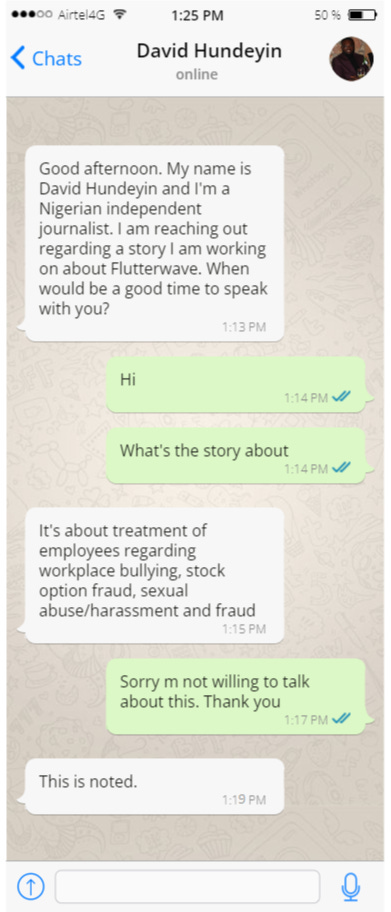
Even though the following days came and went without any sign of the story, Flutterwave’s PR efforts stayed firmly in overdrive throughout this time. First came a flurry of activity in the above-mentioned WhatsApp group when one of the company’s ex employees whom I reached out to for general comment politely said no, only for a screenshot of my conversation with him to start making the rounds a few hours later.
Then came the barrage of calls and messages from everyone connected to Flutterwave with whom I had spent the past 6 months in quiet correspondence while researching the story. They all wanted to know, “Why did I just get a call from Flutterwave? I hope I’m not in trouble. Did you tell them I’m talking to you?” “Trouble?” I silently wondered. “It’s a former workplace, not a religious cult, and you’re all adult professionals, not bullied teenagers – what on earth are you so afraid of?”
Then came this from my editor, informing me that – story or no story – Flutterwave was going to put out something in response to whatever it thought my story was going to be about. Someone not in the know might have wondered – why is a $3bn unicorn so terrified about a story that doesn’t even exist yet? What does it have to hide?
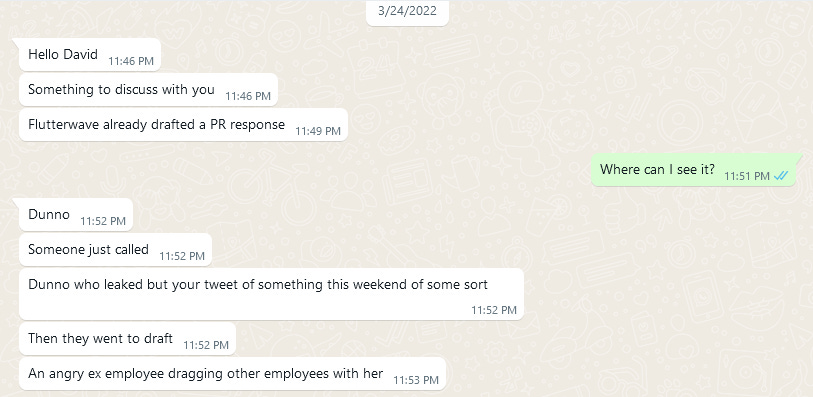
Unsurprisingly, when the material in question – a fawning 2,300-word PR interview – eventually emerged on April 3, it was an attempt at a direct response to the issues mentioned in the request for comment above, namely employee stock option fraud, sexual harassment and workplace bullying. A little amusingly, it contained a facile attempt to respond to a serious insider trading issue that I briefly teased with an ex employee who had spent our 45 minute conversation referring to Flutterwave as “we.” She incidentally, showed up at the Flutterwave Retreat in Accra, Ghana a few days later.
None of this came as a surprise at that point. Since my introduction to the weird internal world of Flutterwave in October 2021, I had witnessed erratic behaviour, sudden panic attacks, group bullying and inexplicable bad faith actions by current and ex staff among each other, competing to get into the good books of a larger-than-life founder who has transcended his birth name, and is now only known by his initials, “GB.”
Thinking of Flutterwave as simply a business that processes electronic payments would be like thinking of the New York Mafia as a group of pizza shop owners – there certainly is that, but there is also so much more going on under the hood. This is precisely why I intentionally leaked word of my story 3 weeks ago in hopes of seeing what else this cage-rattling would uncover. I say “what else” because contrary to what I told most of the 17 current and ex-Flutterwave sources I spoke to, this is not in fact, a story about sexual harassment or workplace bullying. It’s not that those things aren’t present in this story – it’s that the real story makes them seem positively trivial in comparison.
Before we get into that, here is a quick round-up for the benefit of readers who have been living under a rock for the past 3 weeks. After my head fake 3 weeks ago, Flutterwave eventually blinked first and pushed out a lengthy press release attacking 2 former employees suspected of being my sources, including former Flutterwave Head of Implementation, Clara Odero. This turned out to be a mistake. Clara, who runs Credrails these days and does not lack a spine of her own, decided to hit back. A few hours after the Flutterwave press release went out, this happened:

If you’re all caught up, it is now time to dive into a story that is a lot more sinister than you would think. To take us through this weird timeline of events from 2016 to date, I will introduce my 4 principal sources and co-narrators. “Jennifer,” “Ose”, “Sheyi” and “Temi” are the names chosen to shield their identities. Apparently, merely being suspected of speaking out against Il capo di tutti i capi – he of the double consonant initials – could be a red card for any subsequent efforts to work in Nigeria’s small and highly incestuous tech space. Preserving their anonymity is key, so the only detail that will be volunteered is that they are all among the first set of Flutterwave staff, and they all left the company between 2018 and 2021. Here are their stories.
Jennifer: The Consultant Versus The (Lack Of) System
Jennifer joined Flutterwave in September 2017. Coming from a senior role at a Big 4 consultancy, it took some doing to convince her to join Flutterwave in the first place. She recalls that she actually had a job offer at Access Bank before The Man stepped in. The Man here is Olugbenga Agboola, also known as “GB,” (and sometimes “Greg” – more on that later).
GB somehow convinced Jennifer to take the plunge into a 16 month-old fintech startup. Apparently, GB is blessed with the gift of persuasion, which becomes a recurring theme in the course of this story. Key to Jennifer’s decision to turn down an already-accepted, cushy job offer at one of Nigeria’s largest banks was the once-in-a-lifetime opportunity to join an early stage high growth startup and take advantage of its stock compensation plan. Over and above simply earning a salary, such shares in a sufficiently valuable startup can be financially life-changing. Flutterwave was not coy about it either. The offer was printed in her employment letter, and then in her confirmation letter 7 months later.
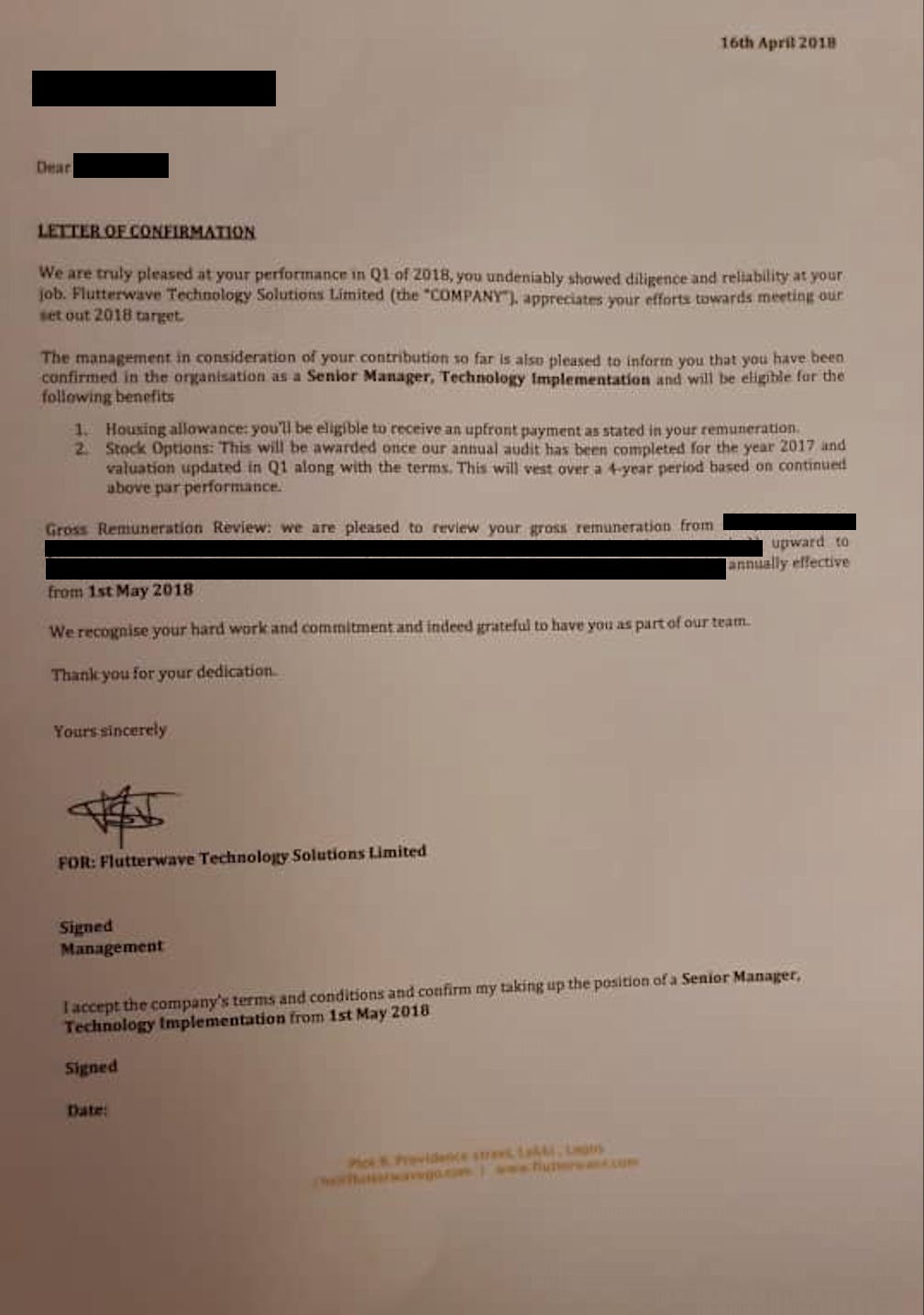
She also had no problem with performance on the job, as evidenced by the following documents from her case, which is currently at the National Industrial Court where she is locked in litigation with Flutterwave.
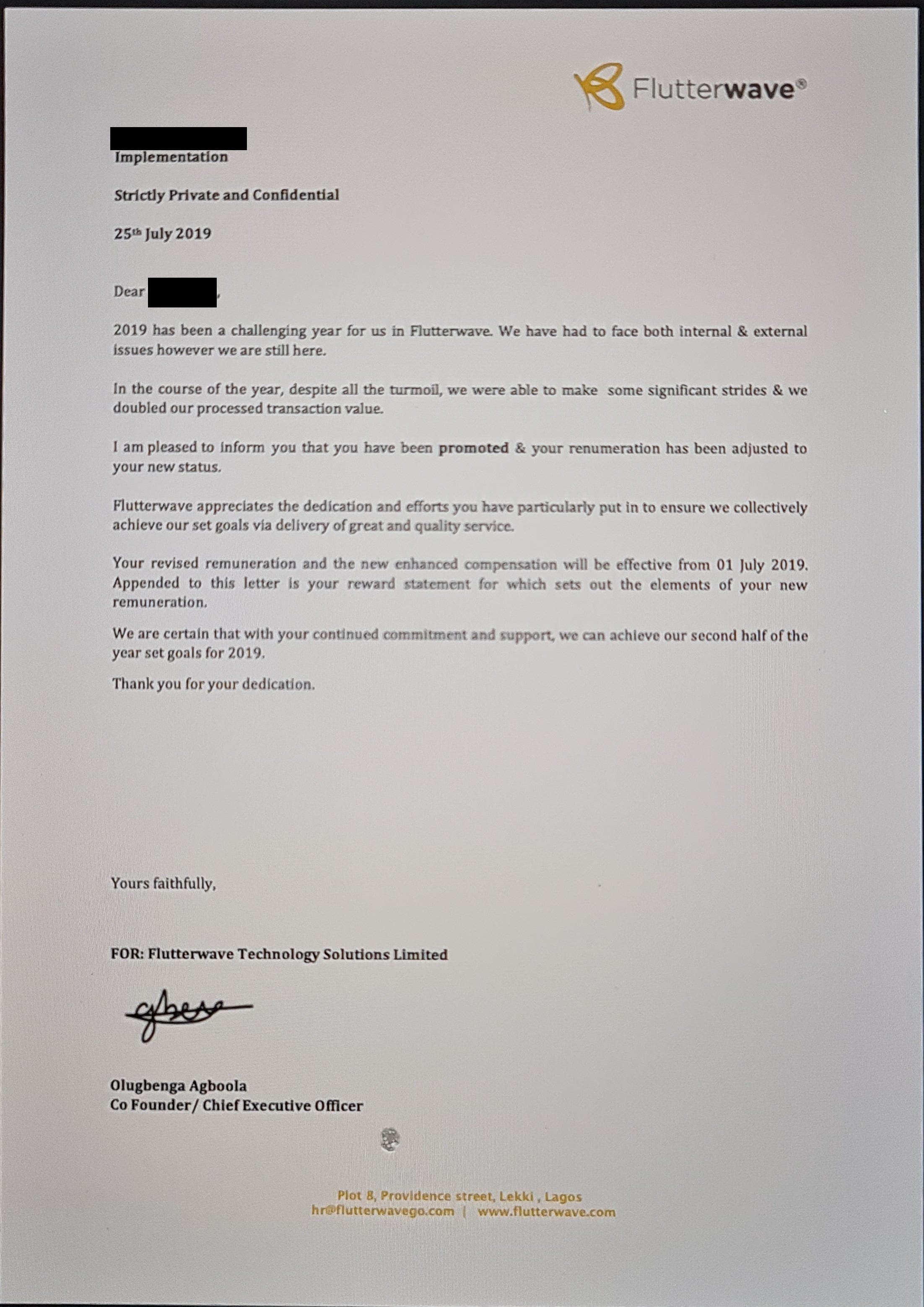
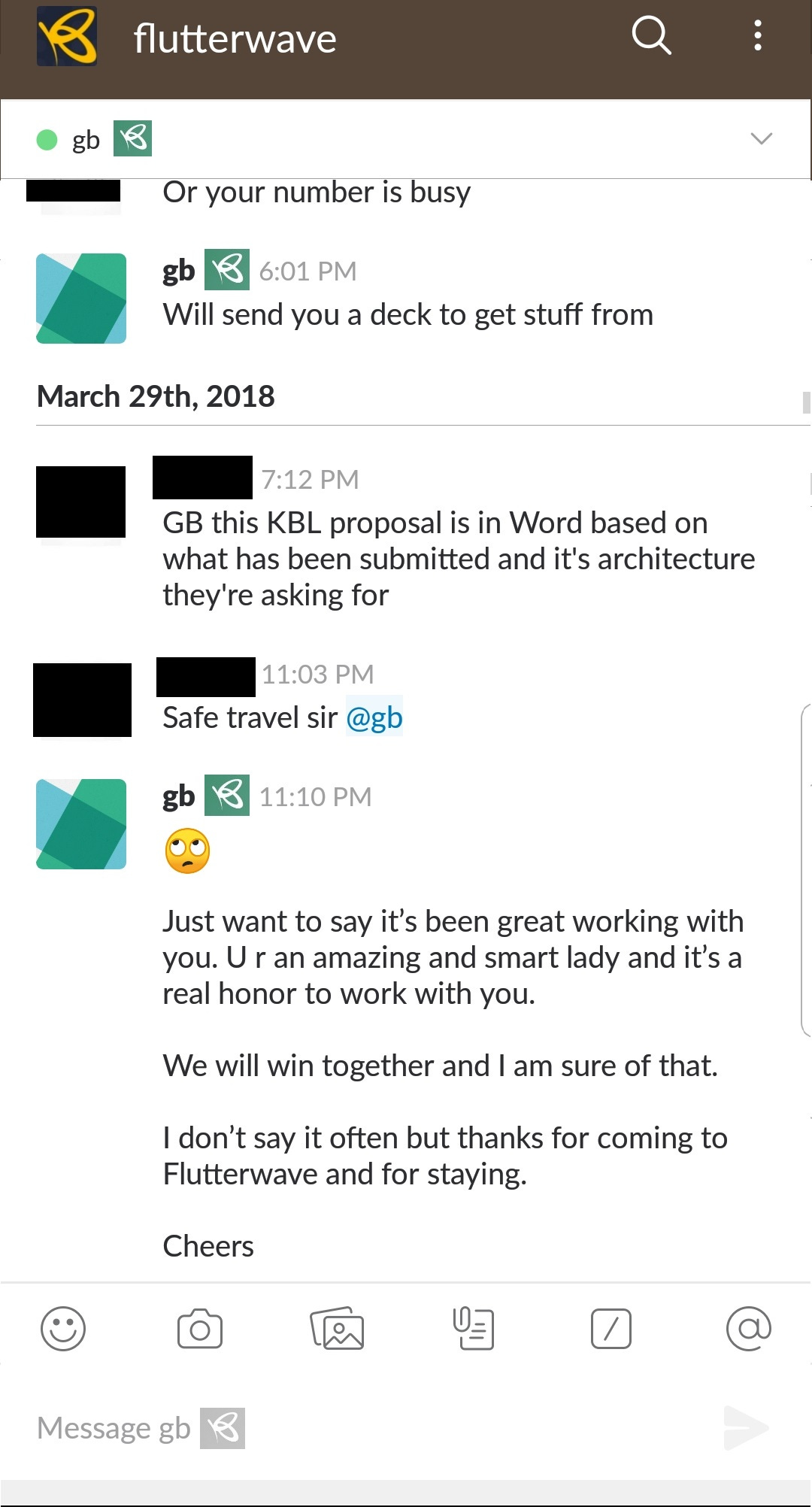
According to court records, Jennifer’s problems at Flutterwave began when – for whatever reason – she fell out of favour with GB despite clearly having no issues with job performance. A list of witnesses in the case summary reveals a list of Flutterwave staff who joined the company around the same time or even later, and some of whom resigned before she did. They all received the stock options promised to them. Jennifer however, did not, despite repeatedly bringing up the subject with GB.
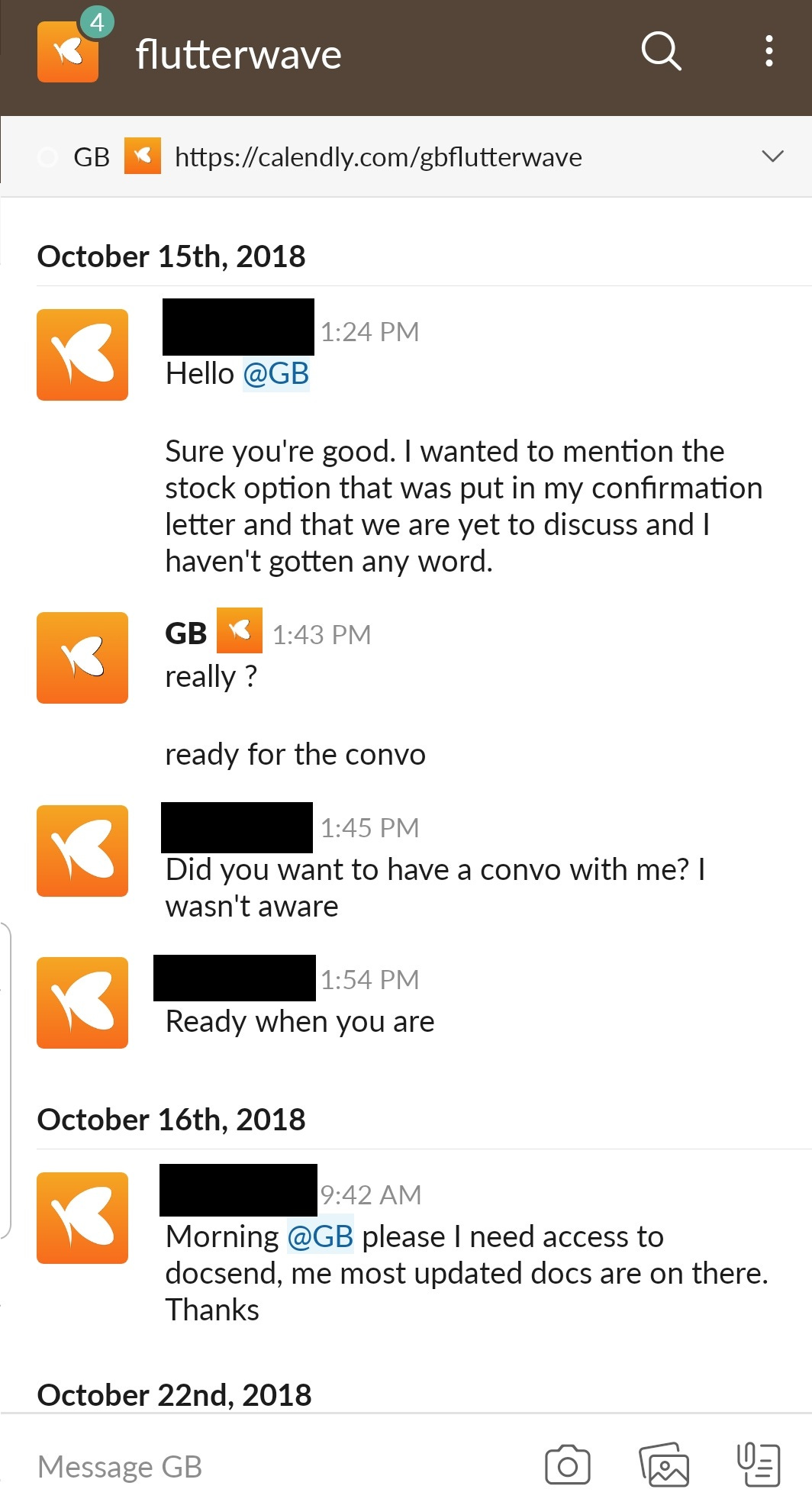
For legal purposes, Jennifer did not agree to be quoted directly in this story, but she did however confirm that former Flutterwave CEO Iyinoluwa Aboyeji signed off on the letter offering her 40,000 shares, which at current market valuation, are worth roughly $2 million. This letter however, vanished into a black hole shortly thereafter, when Iyin was abruptly and unexpectedly fired by GB, leaving him locked out of all company resources including his official email. (More on that later too.)
GB meanwhile, continued to sign off on stock option offers for his preferred office favourites, which created a confusing situation for Jennifer. On the one hand, he continued to praise her work regularly and she consistently met or exceeded her performance targets. On the other hand, only those who kissed the metaphorical ring would get these entitlements that were written in their job offer letters.

Perhaps more meta was the fact that even those who managed to get their stock packages ended up receiving pitiful offers that were far below market value for their shares. In February 2021 for example, this ex-employee who asked to be completely anonymous was given an offer of $3.50 per share.
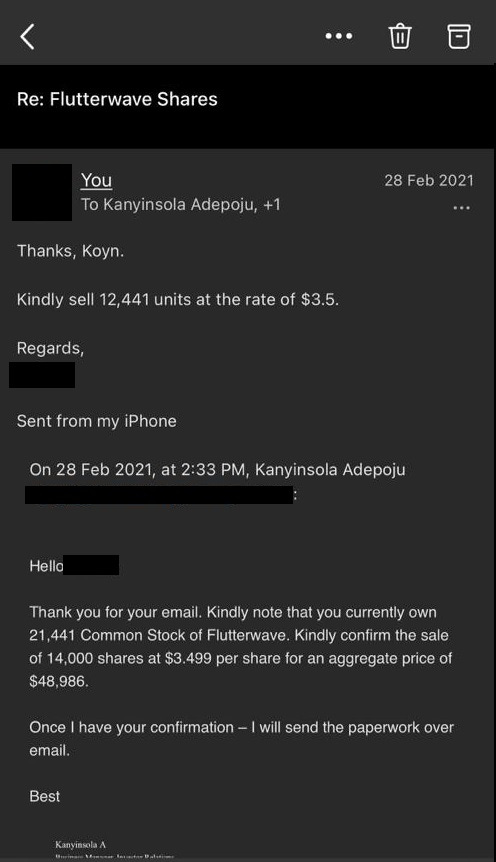
The actual market value of Flutterwave shares, as explained in a recent call with a potential Flutterwave investor below, was closer to $20. In other words, GB only permitted this (apparently fortunate) employee to get roughly 17.5 percent of the value of his shareholding. These shares, I was reliably informed, are only permitted to be sold to an investment vehicle controlled by none of other than GB himself at the price he decides. Anywhere else, this would be classified as insider trading. In Nigeria?
It’s Tuesday.
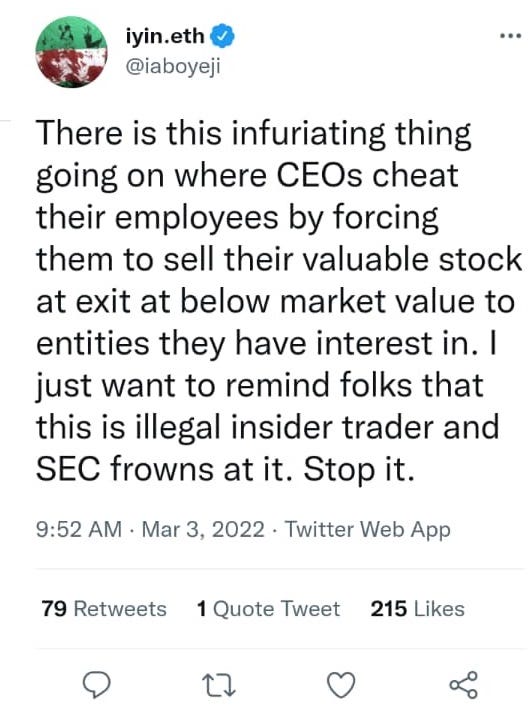
Another source I briefly spoke to claimed that it was after a recent conversation with Iyin about her shares while facing this very issue that the tweet below materialised. Feel free to draw your conclusions.
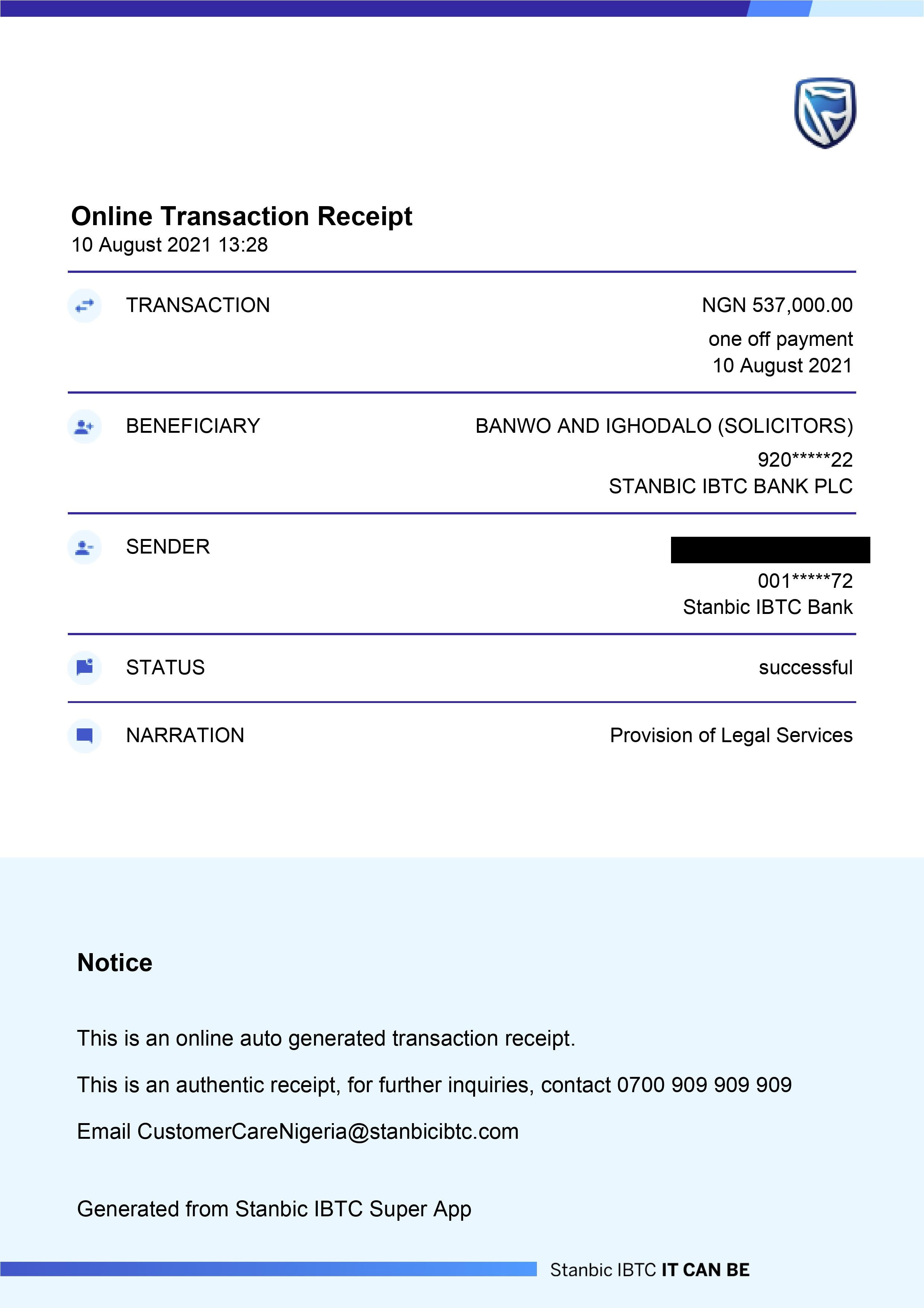
In any case, Jennifer felt strongly enough about the injustice done to her that after leaving Flutterwave in 2021 without any resolution, she decided to go to court. She retained the high-flying law firm Banwo & Ighodalo to work on her case. Payment was made and things seemed to be moving well.
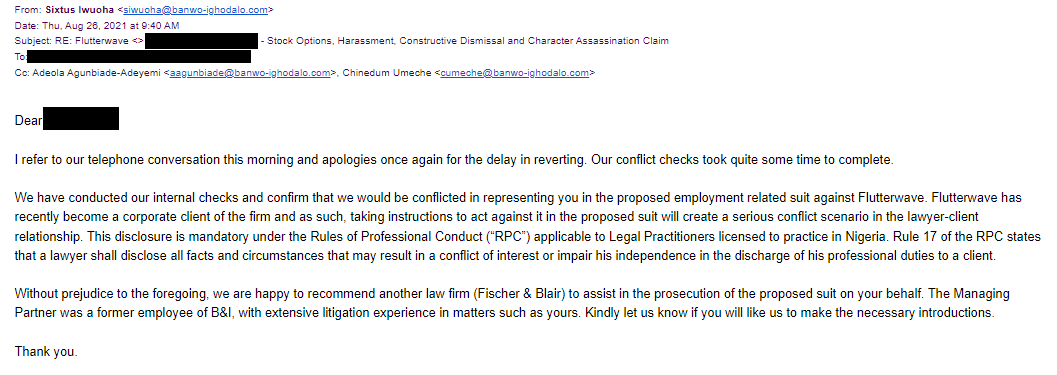
Suddenly and without notice, shortly after presenting a professional opinion stating that Flutterwave was in the wrong and had a case to answer, B&I quietly informed Jennifer that they had been retained by Flutterwave and they would have to drop her case. Apparently whenever Flutterwave wants anything in Nigeria – ethical or not – GB just signs a cheque and makes any problem go away.
In fact as I found out the further I dug into this maze of documents and recordings, the only way for a Flutterwave employee or ex employee to ensure that GB pays them what they are owed is to weaponise a relationship with one of his investors. He only responds to superior power, not threats, pleas or even lawsuits. The fellow below apparently learned that lesson and used it well.

Ose And Temi: Flutterwave OG’s Break The Omerta
Now let’s take a step back 6 years. The year is 2016 and Iyin Aboyeji has just announced what to all intents and purposes is his new venture called Flutterwave, fresh from exiting Andela. Olugbenga Agboola is the CTO and Co-Founder of Flutterwave, having resigned from his job at Access Bank to take this exciting new dive into burgeoning tech space. Or at least that’s what his LinkedIn page says anyway.
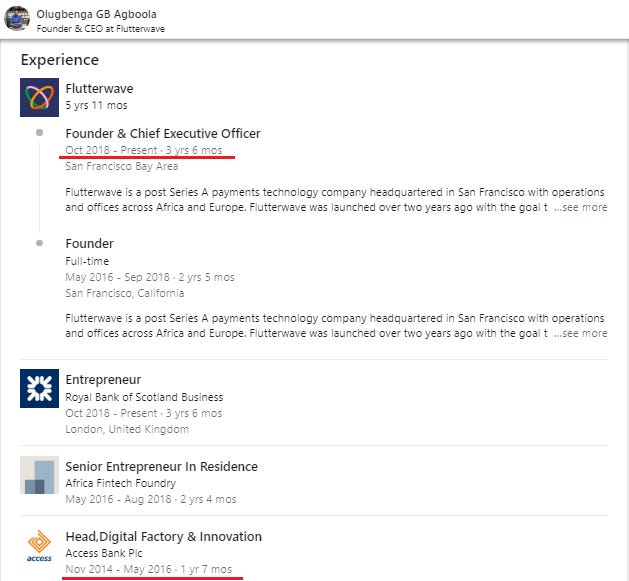
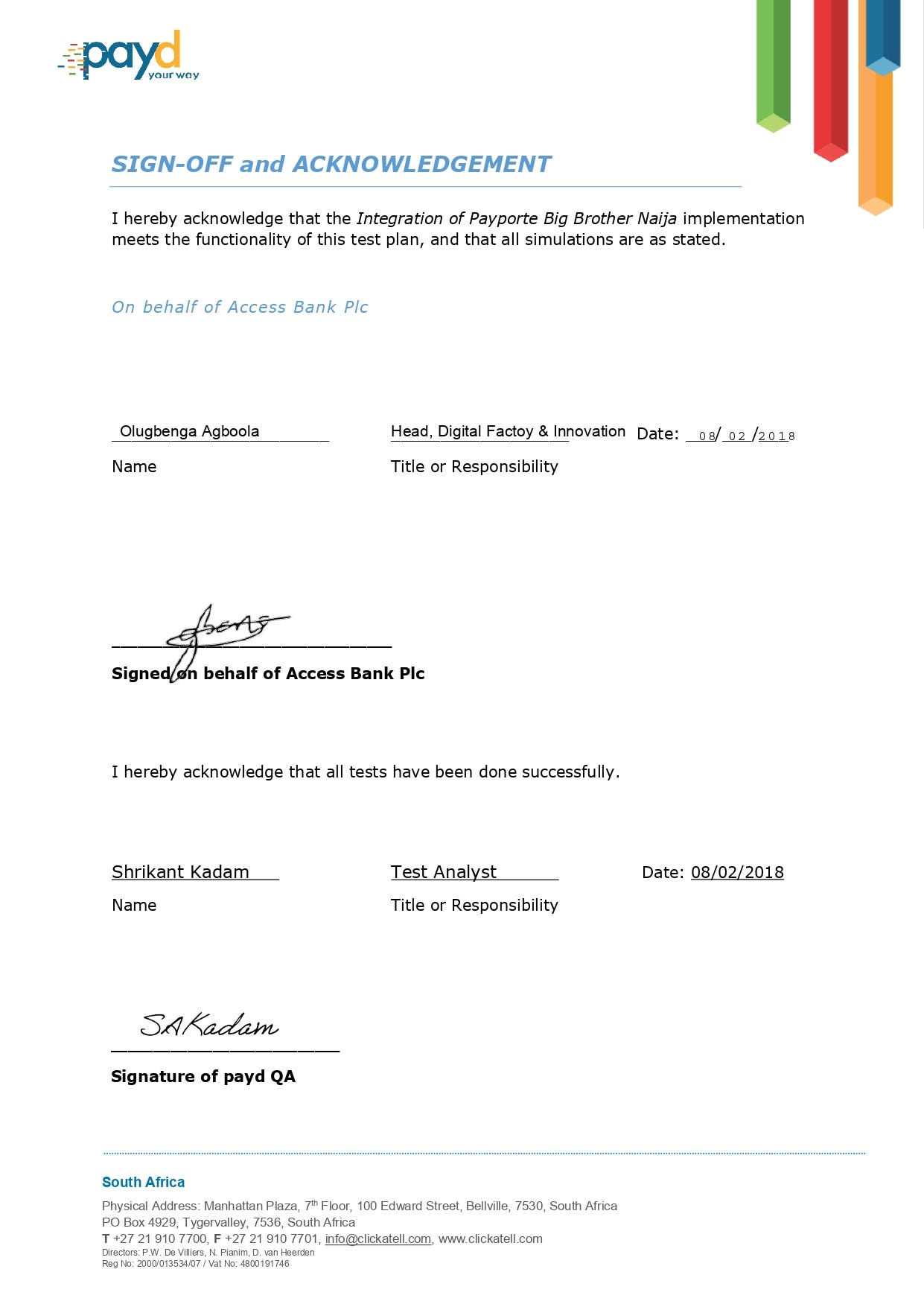
In reality, as I found out to my mounting amazement, Iyin Aboyeji was never anything more than a corporate front for GB who in fact never resigned from his job at Access Bank, and hid the fact of his concurrent involvement in both entities from investors, regulators and even his Access Bank colleagues. I will repeat that for emphasis: Olugbenga Agboola kept his job at Access Bank while building Flutterwave concurrently for at least 2 years while using a young tech figure as the convenient face of his business. Here is evidence.

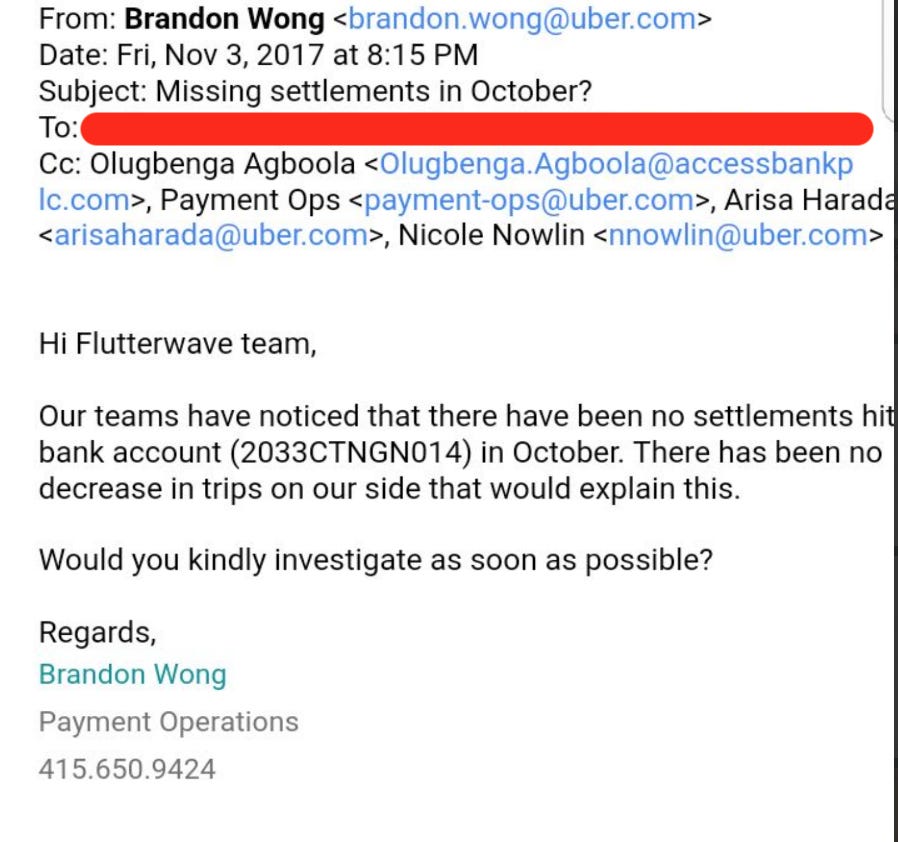
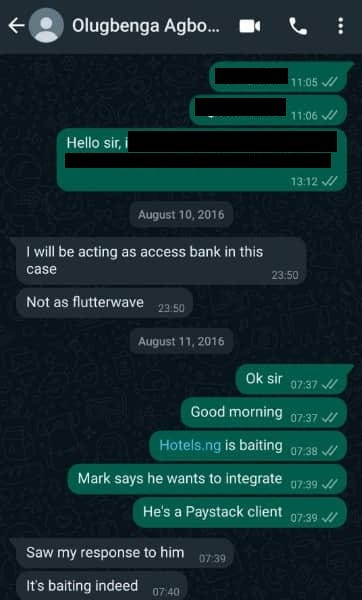
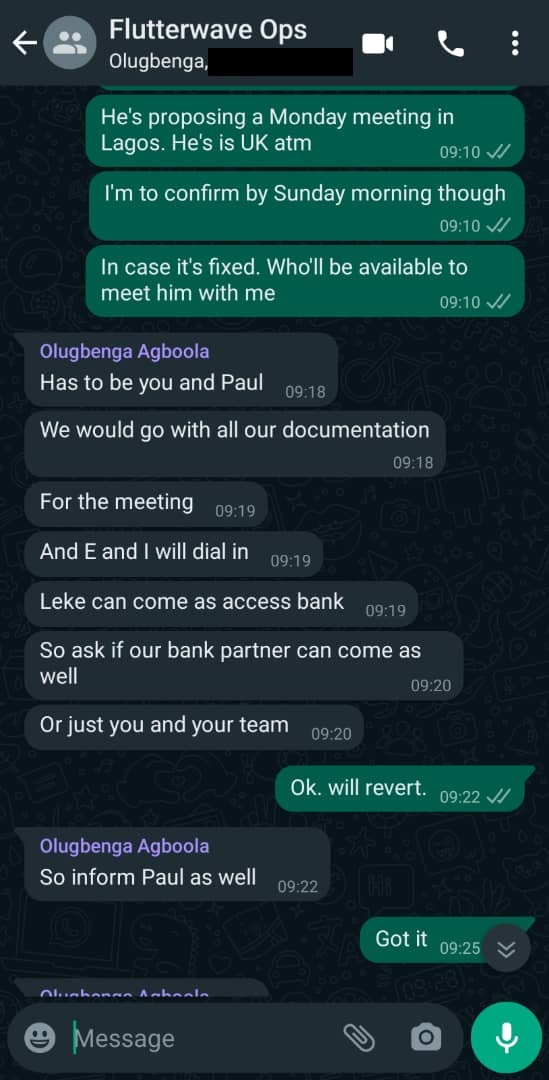
In case you are thinking that this was some kind of innocent oversight or victimless crime, consider the next set of top secret messages you are about to see. These messages were as incredibly difficult to obtain as they are damning. In the message below, GB reveals to an employee that he will be “acting as Access Bank” in an interaction, effectively representing a bank he works for while using its resources to drive his personal interest at Flutterwave. Or Insider Trading, as that is otherwise known.
In the message below, GB instructs an employee to advise an external party about the attendance of Flutterwave’s banking partner Access Bank, represented by Adeleke Adekoya at a meeting. The problem is that Adeleke Adeokya at the time also happened to be a Flutterwave co-founder. In other words, for at least 2 years, GB had free reign to use Access Bank assets to benefit Flutterwave without the knowledge of Access Bank or most external Flutterwave stakeholders.
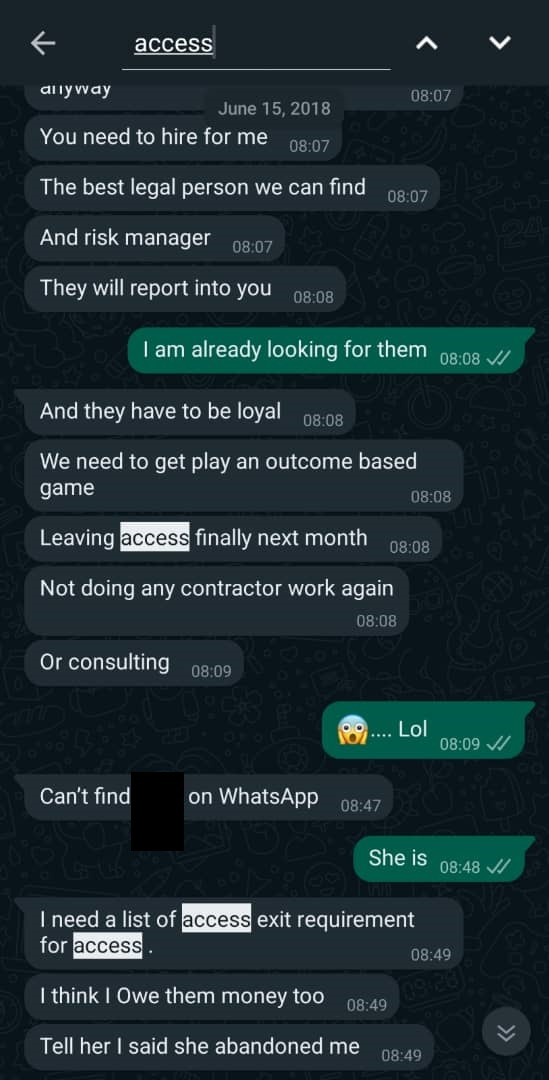
In the messages below, GB is seen enjoying a hearty laugh at the tail end of his time with Access Bank after the bank has found out about his incredibly illegal insider trading arrangement and promptly booted him out. Instead of contrition or humility, he urges employees to approach questions about the illegality with a bold face and throw the onus back to the questioner.

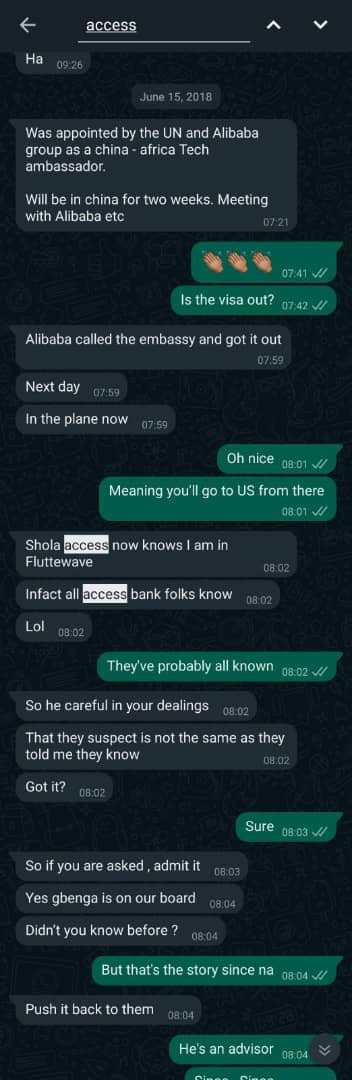
Finally and most significantly, the messages below portray in his true element. Present at a Flutterwave remote meeting while still concealing his involvement in the company from outsiders including Access Bank, he forgets that Iyin is supposed to be answering questions as Flutterwave’s “CEO,” and he jumps in to take charge of the meeting, only realising afterward that he forgot to alter his voice, potentially revealing his true identity as Gbenga Agboola to the other parties on the call. He then instructs an employee to lie that he was not the one whose voice they just heard.

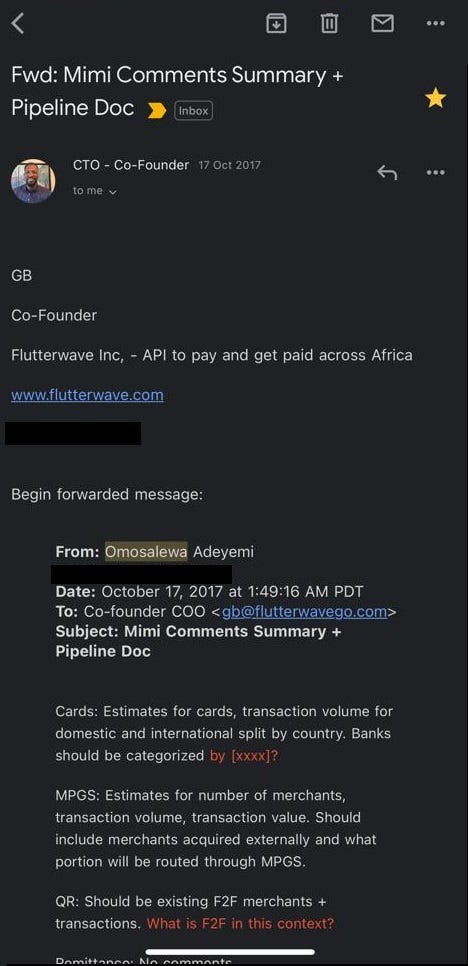
In this message from April 2017, GB remarks that he is being too popularly identified with Flutterwave for his liking. At this point, he is still pretending to be Olugbenga Agboola, Head of Digital Factory & Innovation, Access Bank, while his official Flutterwave email address deliberately does not include a name tag yet.
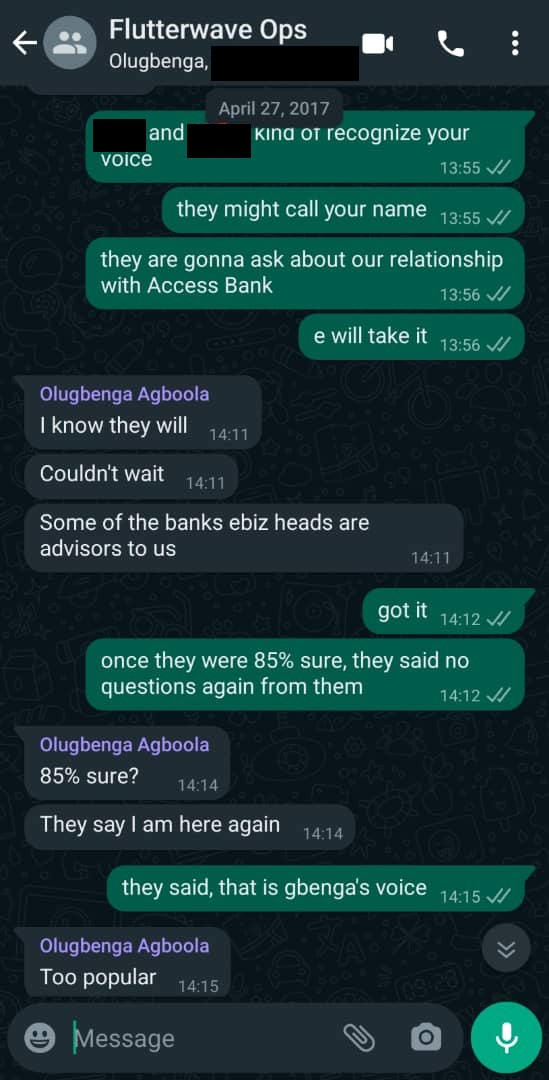
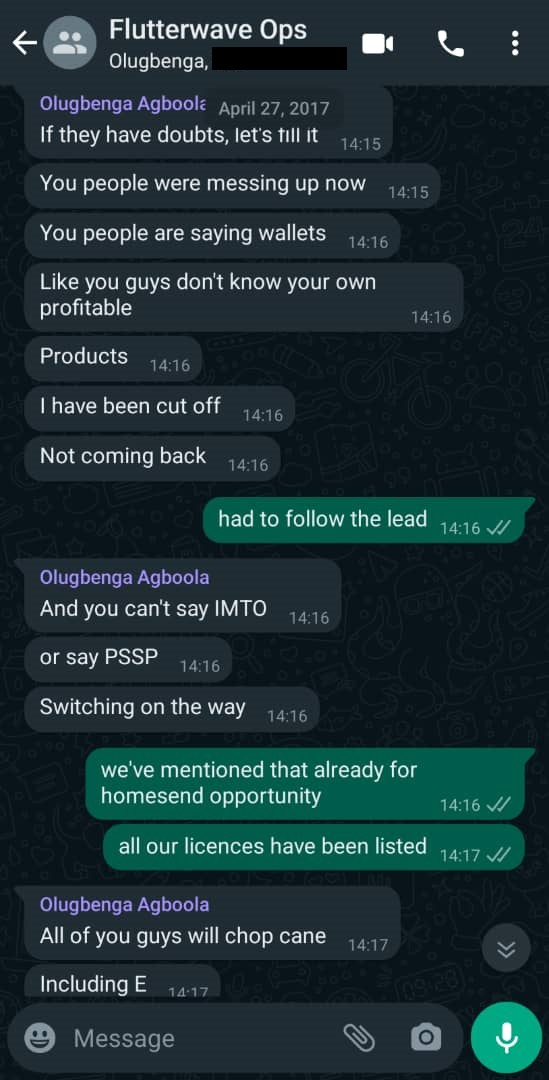
And just in case there is still any doubt about exactly whose show Flutterwave was all along, the message below from April 2017 shows GB promising that Flutterwave staff including Iyin the CEO will “chop cane” (take a beating), ostensibly for poor performance on a crucial call.
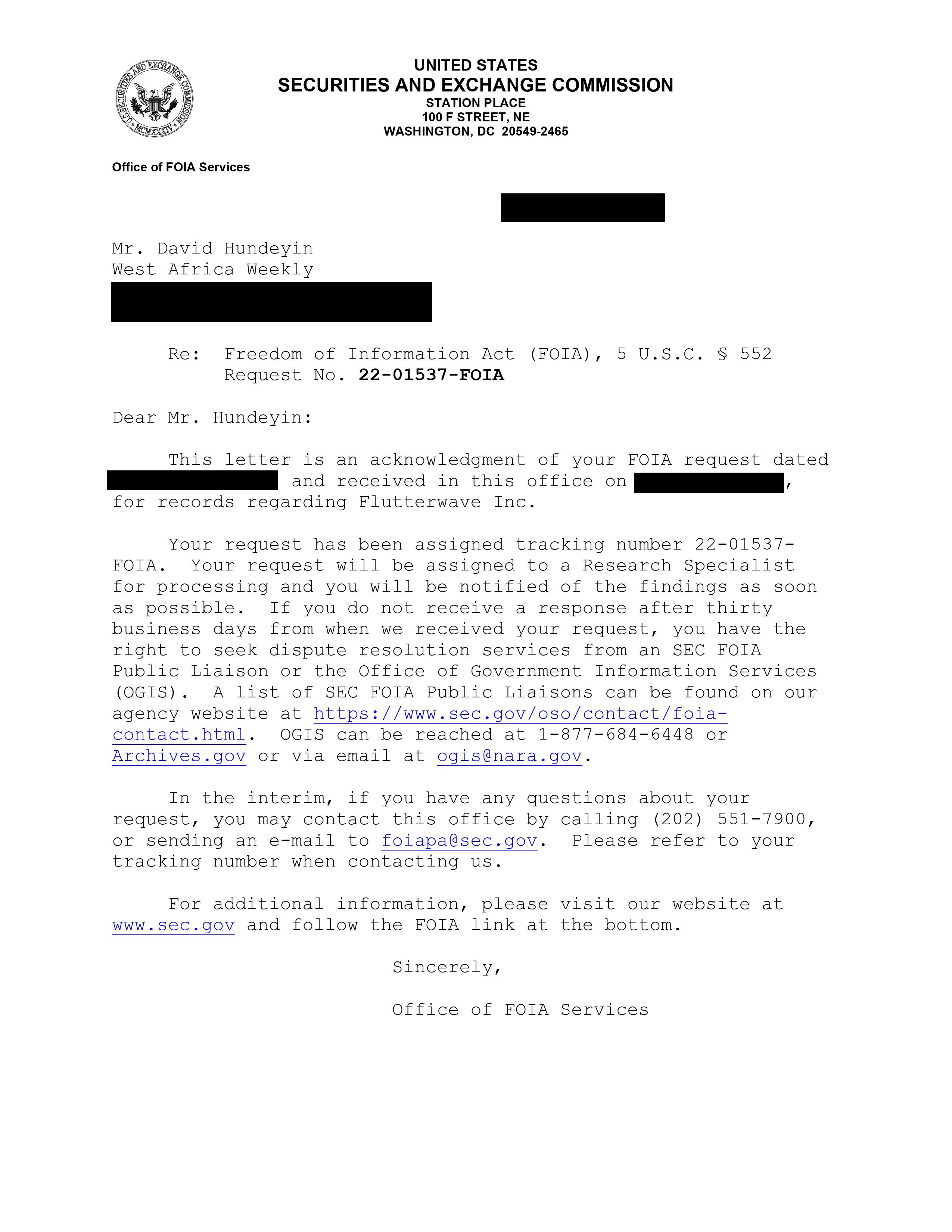
In early 2018, news about this unholy arrangement got to the United States Securities and Exchange Commission (SEC), which has jurisdiction over the Delaware-registered corporation. Under US law, a conviction for insider trading carries a criminal sentence of up to 20 years in prison. According to several sources, GB, Iyin and – for some reason – Herbert Wigwe flew to the Washington DC for an SEC hearing where they allegedly testified under oath that GB never worked simultaneously at Flutterwave and Access Bank. To confirm whether this actually happened, I submitted an information request to the SEC under the US Freedom Of Information Act (FOIA).
The SEC’s response, which came a few days later, declined to grant me access to the records in question citing an exemption under Section 7C.
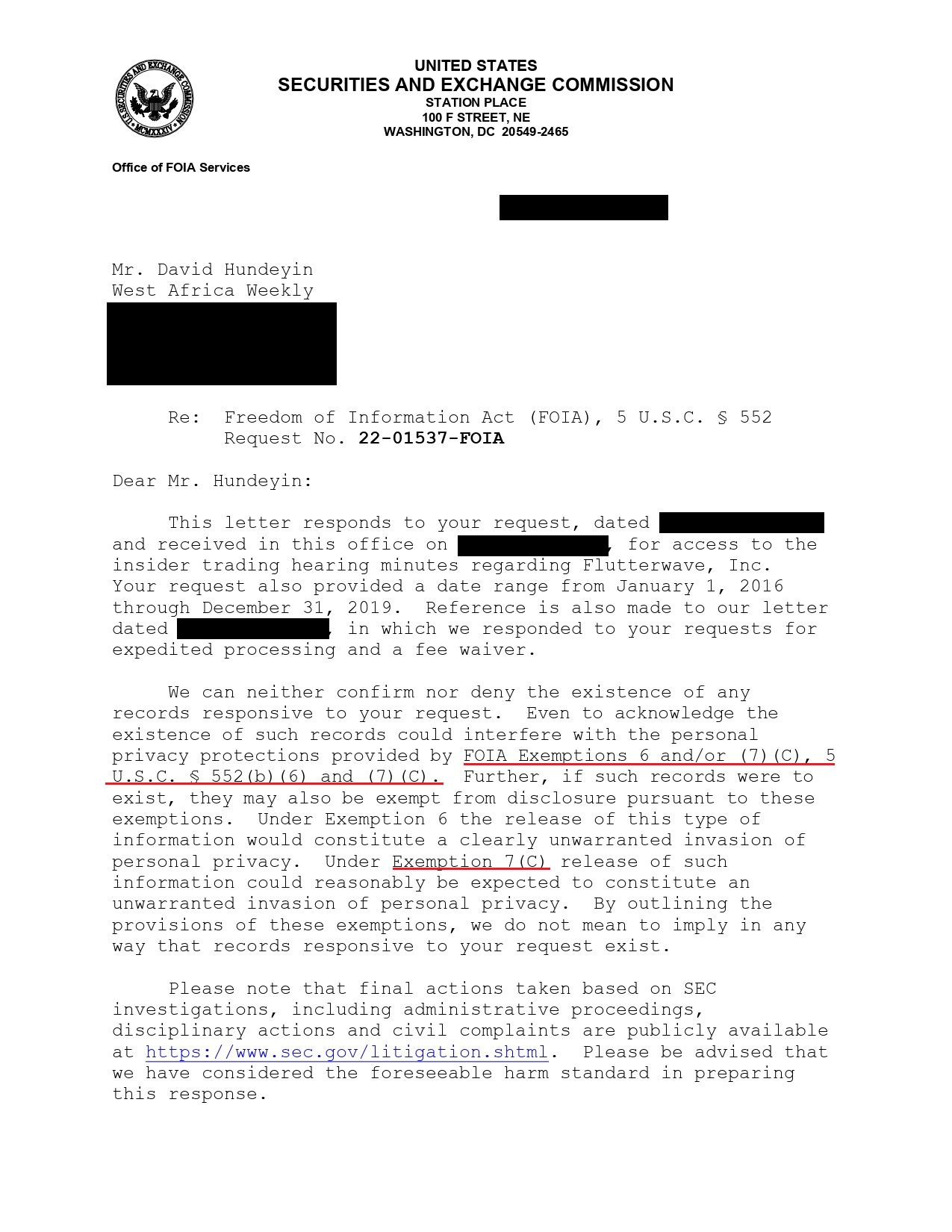
Since exemption 7C was mentioned 3 times in the FOIA request rejection, I looked it up and this was what I found.

Whether this means that the SEC currently has an open investigation on Flutterwave, only the Commission itself can answer. I did however, submit an appeal, so we wait and see.
Remember “Greg Agboola” mentioned briefly at the outset? It turns out that not only does GB have a habit of changing his voice so as to pretend to be other people on conference calls, but he also changes his entire identity when it is convenient to do so. In 2016 for example, at the commencement of business, Adeleke Adekoya was given 37.5 percent of the company, with the remaining 62.5 percent supposed to be divvied up between GB and Iyin. GB then informed Iyin that there was a CTO called “Greg” who would need to be given 10 percent, which would be taken out of Iyin and Leke’s shareholdings.
Which would be fair and unspectacular were it not for the small fact of Greg and GB being in fact, one and the same person.
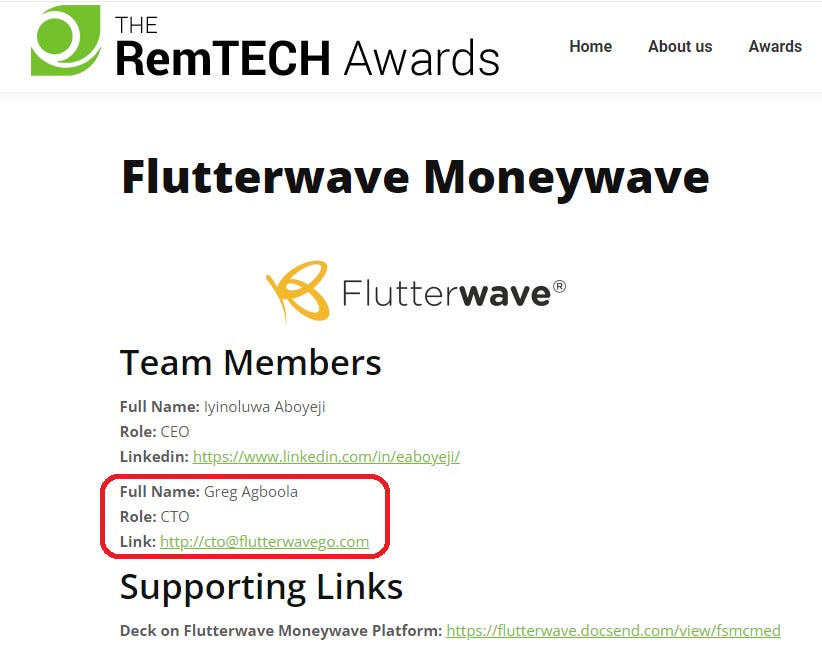
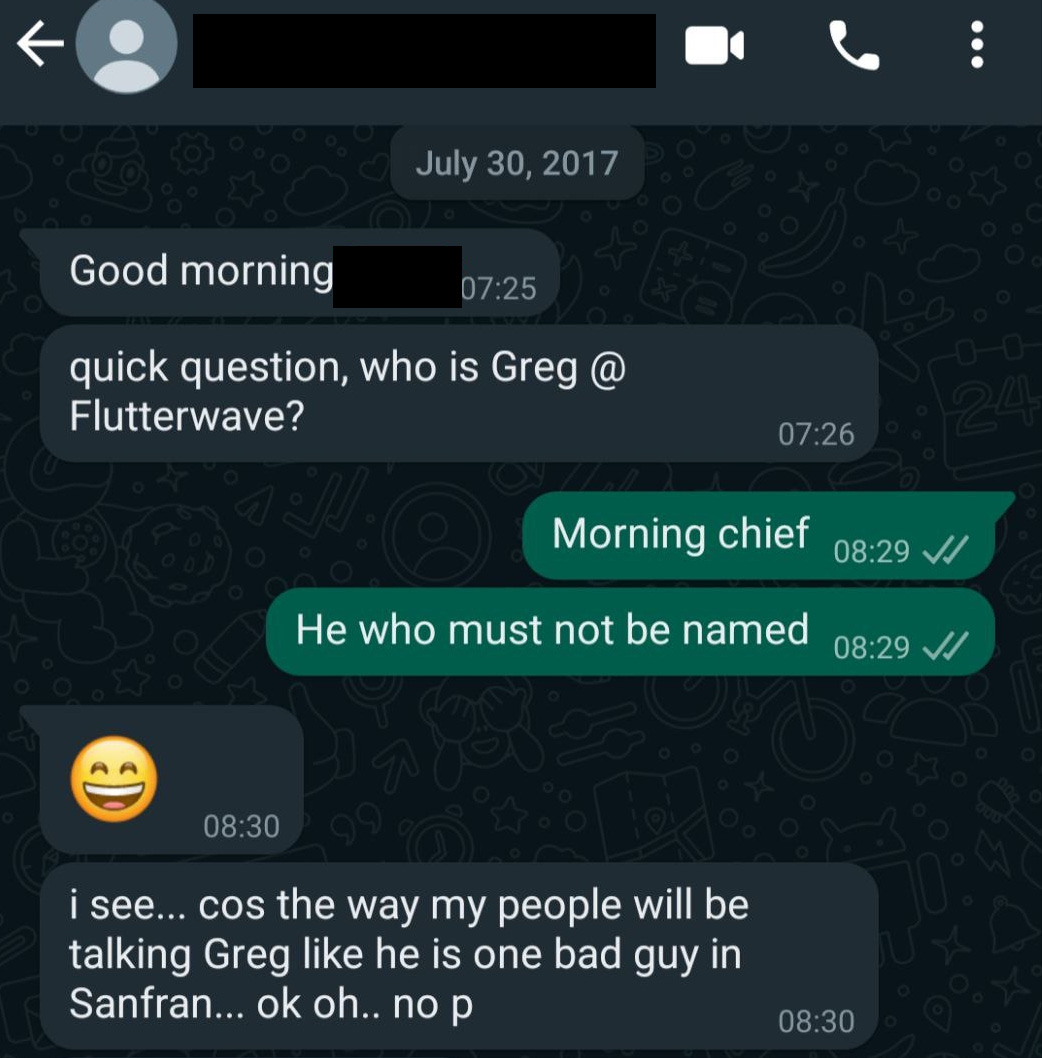
At this point, I will take a back seat and let the two co-narrators Ose and Temi have a “conversation” which I put together from their lengthy testimony transcripts.
[Ose]: “He is currently trying to shaft investors in addition to everyone else. So the first Angels that they had – he wants to do secondary buyouts, while they want to IPO. And so he will tell them a price that was from several [funding] rounds before like they can’t find the [current price] information themselves. In Nigeria, the reason they had so many chargebacks with Arik was because they were charging cards 3 times. In fact the reason no one has bought Flutterwave is that a majority of their transactions would never pass compliance.”
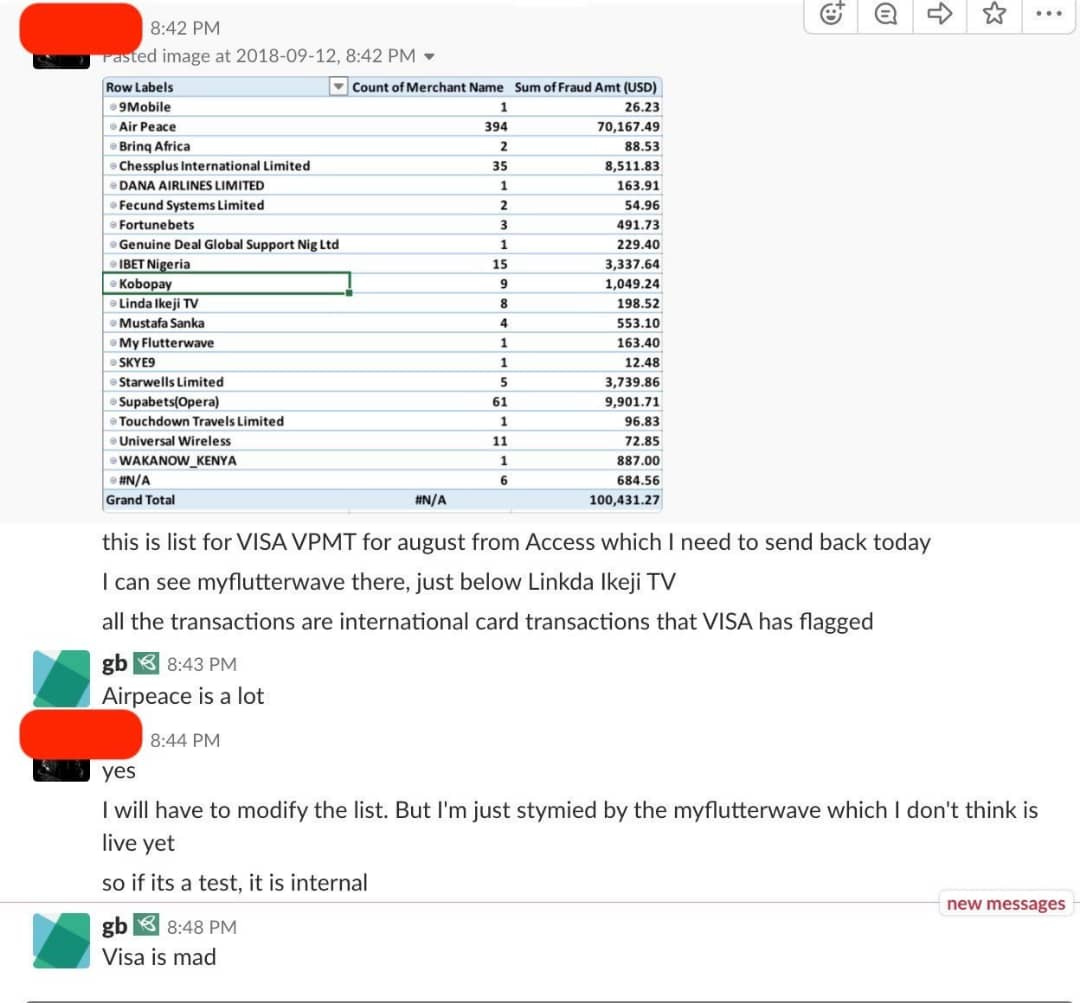
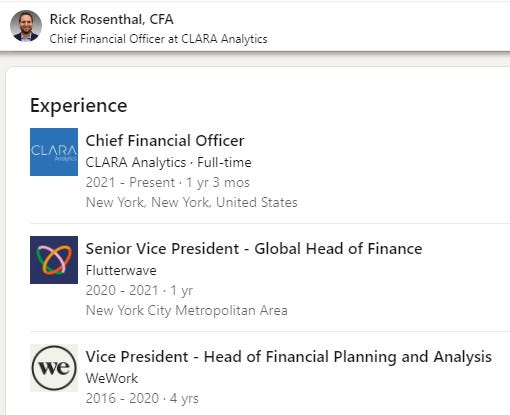
[Temi]: “Someone sent an email detailing all these fraudulent activities to every investor on the cap table, and they are all aware and they talk about it, but they did nothing. After that incident, they put spyware on everyone’s computer. The thing is, if Flutterwave goes down, everyone who is invested takes a hit, and it becomes a problem of who is left holding the bag. Greycroft is the biggest enabler of all of this because they have known this for years, but they keep pushing Flutterwave stock. The company can’t even make it to IPO because when you IPO, you have to show your financials. I don’t know what kind of cooking they’ll have to do with those financials, but the numbers don’t match up. I mean this guy went out and hired the WeWork CFO! I’m not saying there’s anything wrong with that but really? He couldn’t find someone else?”
[Ose]: “In case you are wondering why nobody seems to be afraid of losing their money when Flutterwave crashes, the thing is is that it looks like a lot of money to us, but if you look at how much Tiger has invested in Flutterwave versus the size of the fund, it’s not that much money, so they can take the loss. There is vastly more upside than downside to them. If it goes well, they make money in an emerging market – everybody is happy. If it tanks, the loss is a rounding error in global terms.”
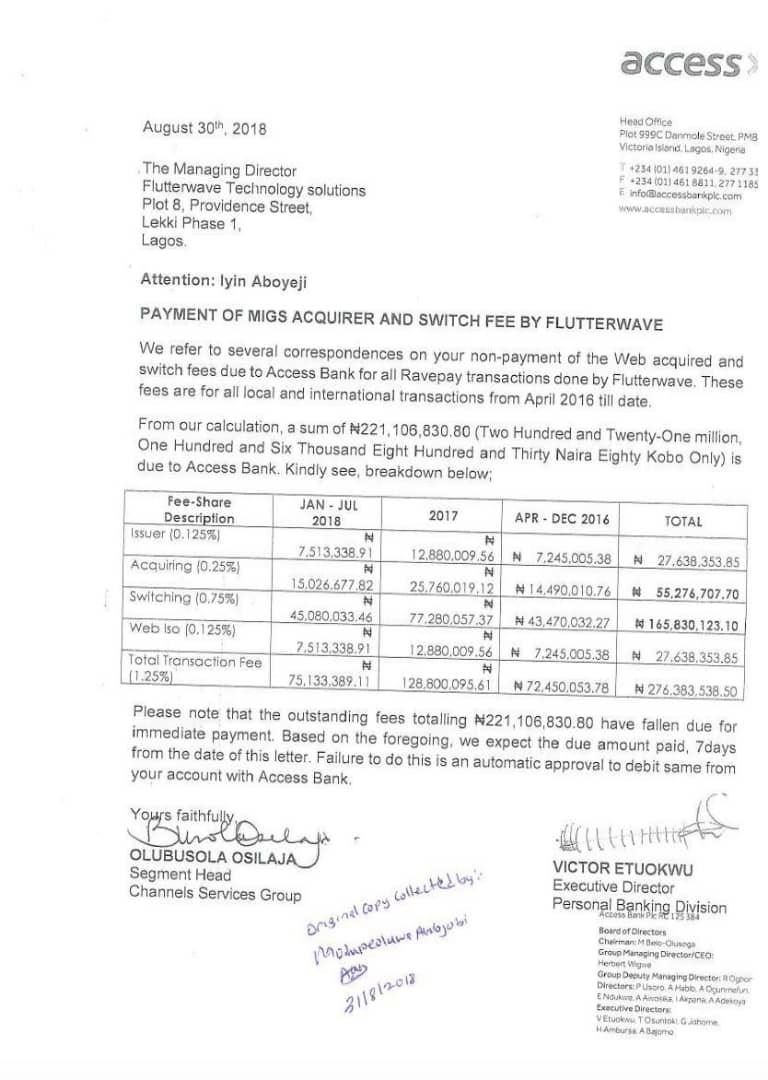
[Temi]: “You just need to find someone at Access Bank who is willing to talk because when they were audited during the Access-Diamond merger [Q3 2018], they discovered that Flutterwave wasn’t giving them their money. What they discovered was that Flutterwave had been settled, but for some reason, what was supposed to be the bank’s share from these transaction was being settled into Flutterwave’s account and Flutterwave was not remitting it to Access. Why it was even there in the first place is not clear.”